by Patrick Ruckert
www.californiadroughtupdate.org/20220303-California-Water-and-Infrastructure-Report.pdf?_t=1646433904
A Note to Readers
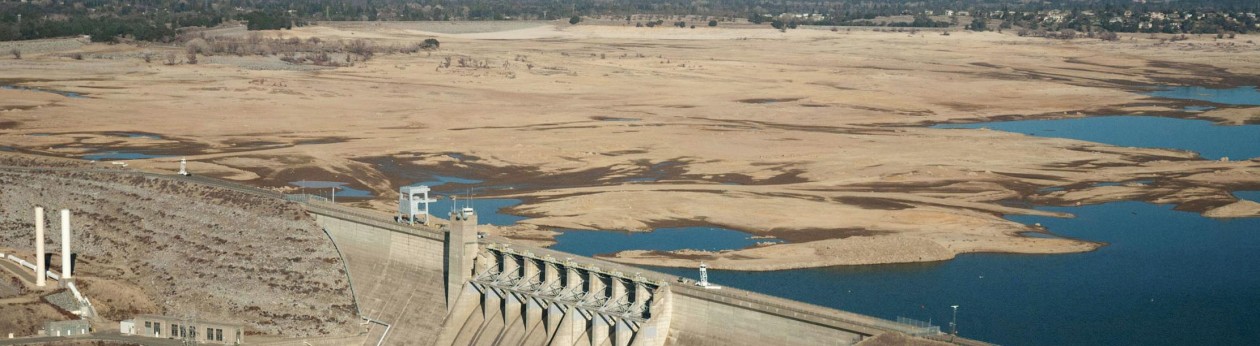
As this week’s U.S. Drought Monitor reflects, the California drought is rapidly intensifying week to week. The “Extreme Drought” category doubled in area in one week, from 6% of the state to 12%.
The monthly measurement of the Sierra’s snowpack statewide, after being about 160% of average for the date on January 1, to 63% of average for March 1. The snowpack is well-below average at the end of what should have been the state’s wettest months of the year, signaling another dry year ahead.
Statewide, Department of Water Resources hydrologists said, January and February will enter record books as the driest documented in state history.
Droughts have real impacts, especially for agriculture. The article, “Last Year’s Drought Cost Ag Industry More Than $1 Billion, Thousands of Jobs, New Analysis Shows,” reports on that impact.
The section on the Colorado River has two articles. The first is a study that claims that “The Bureau of Reclamation’s influential monthly forecasting report for water levels at Lake Powell and other reservoirs are consistently ‘too rosy,’ said one of the five experts who co-published a new Colorado River basin research paper.”
The article sounds the alarm that “In the next week or two, the water level at Lake Powell is likely to dip below a key target elevation of 3,525 feet above sea level — a benchmark water managers have long tried to avoid….”
The Drought Response Operations Agreement defined the 3,525-foot mark as an important “target elevation” for the reservoir. That target provides a 35-foot buffer above the lowest elevation at which Glen Canyon Dam can generate power, 3,490 feet above sea level. More than 3 million customers use Glen Canyon Dam electricity and the federal government generates roughly $150 million in average annual revenue from selling that hydropower.
The second article reports on the snowpack of the Colorado River basin and finds two things to note: First, that after December storms, the snowpack looked to be close to normal. But, January and February was one of the driest on record. So it is now about 80- 106% of normal, which is way lower than needed to prevent further declines in the flow of the river. In addition, the soil being very dry, as the snowpack begins to melt, it’ll go into the ground instead of going into the river
A final quote from that article: “Today, the streamflow is in the bottom 10% of historical records. It’s not good for the lake, which sits today at almost 1,067 feet, down 30 feet from a year ago. It’s expected to drop 10 feet more as the spring irrigation season kicks in.”
Desalination of seawater is seeing much more interest as drought threatens to never end. Some urban areas are beginning to look more seriously at the option. In addition, “The California Coastal Commission is set to vote later this spring on what would be the state’s second major coastal desalination plant in Huntington Beach, south of Los Angeles.” If approved, that plant will match the Carlsbad plant of Poseidon Water, which began producing 50 million gallons of water a day in 2015, providing about 10% of San Diego County’s water supply.
The next section of the report is “It’s Time for a Homegrown U.S. Nuclear Manufacturing Base.”
The last news report in the report highlights the ongoing, never ending “Hysterics about climate change always painting the worst possible future. What they refuse to do is provide known and discoverable options, as we humans always have done to ensure that our future is determined by ourselves and not ‘nature….’” The article is titled, “UN Climate Report: ‘Atlas of Human Suffering’ Worse, Bigger.”
This weeks Feature provides two videos from The Hill website that demonstrate that not all the U.S. media is in lockstep with the “get Russia” narrative. Featuring a relatively new reporter, Kim Iverson, the first video highlights previous warnings from world leaders that NATO expansion would lead to a Russian invasion of Ukraine.